Star Trek Fleet Command
- 4.2
- Rating
- 10.00M
- Installs
- Free
- Price
 Analysis by App-foxy
I went into Star Trek: Fleet Command expecting a familiar space strategy game with a Star Trek skin, but I found something more deliberate than that first impression suggests. It is a long-running strategy MMO from Scopely, built around choosing where to spend time, which risks are acceptable, and when to strengthen your position instead of chasing the next objective. The official universe gives it an immediate identity, but the real appeal comes from the way small decisions accumulate across a persistent campaign.
The game is free to start, and its broad audience is easy to understand: the Android edition has passed ten million installs, while its average rating sits at 4.2 from roughly three hundred thousand ratings. Those figures suggest a well-established community, but they do not automatically make it suitable for everyone. I enjoyed it most when I treated it as a patient planning game rather than a quick action title. If you want instant battles, a short campaign, or a completely self-contained experience, this may not be the best fit.
What the game asks you to decide
The central question is rarely just whether I can win a fight. More often, I have to decide whether a fight is worth taking now, whether my current position is strong enough to support it, and what I am giving up by pursuing it. That gives the game a useful strategic tension. A stronger-looking target may consume time and resources that would be better used improving my fleet, completing a safer objective, or supporting a wider plan.
You May Also Like

 Blood Strike: 2.5 Anniversary
Blood Strike’s Loadouts Turn Every Drop Into a Tactical Gamble
A close look at Blood Strike’s custom loadouts: how fast access to signature weapons reshapes its battle royale rhythm, rewards preparation, and narrows the gap between fights.

 Pandora - Music & Podcasts
Pandora’s Music Is Easy to Start, but Harder to Recover
Pandora’s strength is its low-effort path from a seed to a station. Its weak spot is how much confidence it asks you to place in connection, setup, and quiet recovery.

 8 Ball Pool
 Is Built on Rivalries, Rematches, and Routine
A close look at the rivalries, rematches, shared routines, and unanswered safety questions that turn a quick pool match into a persistent mobile community.

 Samsung Music
’s Quiet Strength Is Playing What You Already Own
Its reach comes less from spectacle than from dependable access to a personal library. That simplicity is both the app’s strongest retention engine and its ceiling.

 AccuWeather: Weather Radar
AccuWeather Review: A Quick, Clear Forecast for Everyday Decisions
For everyday plans, the best forecast is the one you can understand quickly. AccuWeather makes rain timing, radar, and local conditions easy to act on, with a few trade-offs.

 Hill Climb Racing
Why Hill Climb Racing Still Turns Crashes Into One More Run
A tiny car, a bumpy hill and one more upgrade: Hill Climb Racing keeps resurfacing because its simple chaos makes every near-miss feel personal.
More From Our News Desk



That decision space is what separates this experience from many simpler mobile strategy games. In a typical casual alternative, the next action is obvious: collect a reward, upgrade a building, or start the next battle. Here, progress feels less linear. The surrounding universe encourages me to think in terms of timing and opportunity cost. A move that looks efficient in isolation can create a weaker position later if I neglect preparation.
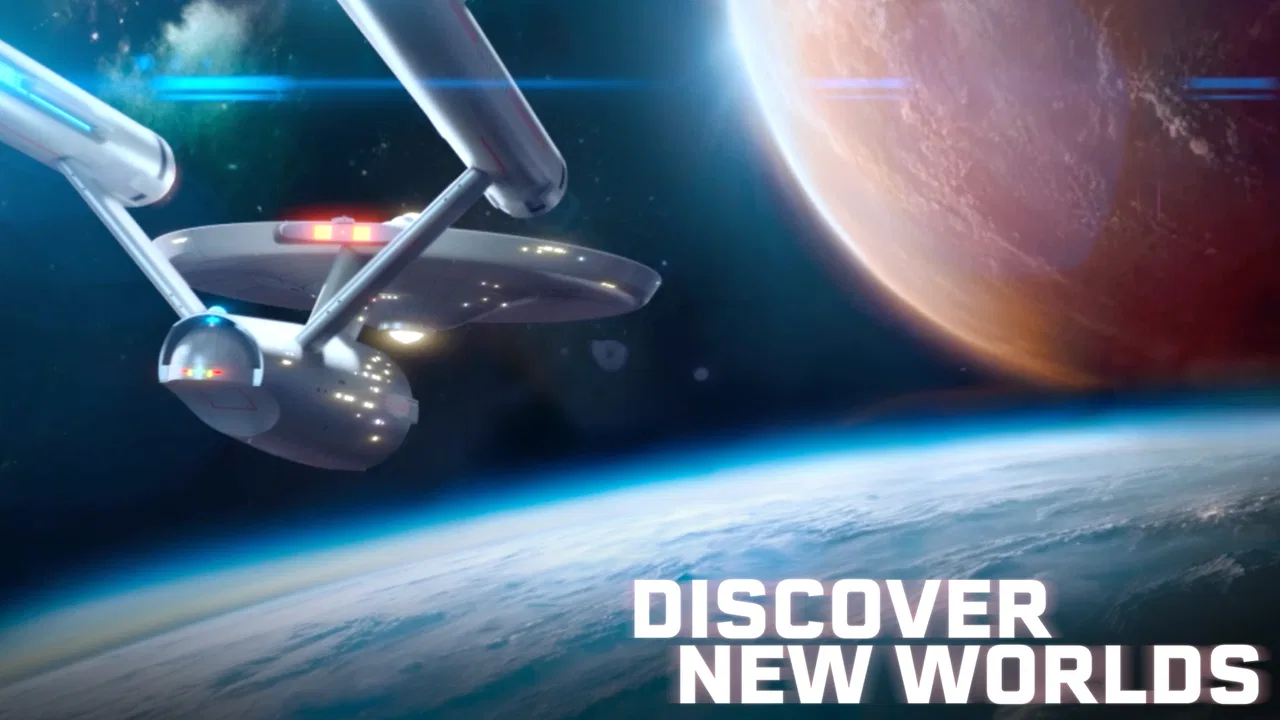
I also found that the Star Trek setting changes how I approach those choices. The recognizable factions, ships, and characters make each objective feel more personal than a collection of anonymous icons. I am not simply improving numbers on a screen; I am trying to build a fleet that fits the kind of commander I want to be. That role-playing layer is subtle, but it helps the planning remain engaging during slower stretches.
The interface presents a lot to absorb, especially early on. There are missions, fleet decisions, upgrades, and several competing reasons to visit the game at any given moment. I recommend resisting the urge to improve everything as soon as it becomes available. A better habit is to decide what your immediate purpose is before spending anything. If you are preparing for combat, focus on the parts of your fleet that support that plan. If you are pursuing story content, avoid draining resources on unrelated improvements.
Planning beyond the next battle
One of my most useful habits was separating short-term actions from long-term goals. A quick mission can be satisfying, but it may not contribute much toward the fleet I actually want. Before committing, I ask myself whether the action improves my ability to survive, unlocks a more useful option, or simply fills a few minutes. That simple check prevents a lot of unfocused progress.
This is also where the game feels more like an MMO than a conventional single-player strategy title. The world is persistent, and the value of a decision can extend beyond one session. I may log in with one plan, discover that circumstances have changed, and need to adjust rather than follow a fixed checklist. That ongoing structure rewards players who enjoy returning to a developing strategy.
For a realistic everyday example, imagine opening the game during a lunch break with only a few minutes available. I would not begin a complicated chain of decisions without knowing whether I could finish it. Instead, I would review my current objectives, collect what is ready, and choose a manageable action that supports my larger plan. In the evening, with more time, I could handle the decisions that require closer attention. The game works well with that rhythm because progress is not limited to one dramatic session.
That flexibility is helpful, but it can also make the game feel demanding. Players who prefer a clear beginning and end to each play session may find the persistent structure difficult to organize. There is always another improvement to consider, another objective to evaluate, or another reason to return. I enjoyed that sense of continuity, although I had to set my own stopping points.
Risk, reward, and the cost of impatience
The most satisfying moments come from taking a calculated risk rather than simply overpowering an opponent. I like having to weigh the possible gain against the damage a failed attempt could do to my wider progress. That makes preparation meaningful. A victory feels earned when it follows a sensible plan, while a defeat can usually teach me something about poor timing or weak priorities.
There is an important distinction between risk and recklessness here. Taking a chance because the reward is valuable can be sensible. Taking the same chance because I am impatient usually is not. The game encourages me to look at the likely consequences, especially when an action could delay other goals. That lesson is easy to overlook when a new mission or target appears attractive.
The free-to-play structure adds another layer to this calculation. Optional purchases range from $0.99 to $99.99 per item, so spending can become significant if I treat every obstacle as something to bypass. I prefer to view purchases as a convenience rather than a requirement, but players who want to progress quickly should be aware of the pressure that can come from a persistent game. The safest approach is to decide on a personal budget before playing, not after frustration has already influenced the decision.
My strongest advice is to protect your long-term plan from short-term impatience. If a purchase, rushed upgrade, or risky action only solves the immediate problem, I would pause and ask whether it improves my position afterward. That does not mean avoiding every optional expense or every difficult objective. It means making sure the decision is part of a strategy rather than an emotional reaction.
The reward structure works best for players who enjoy gradual improvement. I found satisfaction in seeing a previously uncomfortable task become manageable after better preparation. That payoff is less immediate than the reward loop in many lightweight mobile games, but it has more staying power. On the other hand, anyone looking for constant bursts of excitement may see the same pacing as friction.
Adapting when the first plan fails
A good strategy in this game cannot remain fixed forever. The situation changes, my available options change, and a plan that looked efficient earlier may no longer be the right one. I appreciated that the game rewards adaptation instead of treating the first choice as permanent. When something goes badly, the useful response is not always to repeat it with a slightly larger number.
I learned to diagnose failure in layers. First, I consider whether the target was simply too ambitious. Next, I look at whether my fleet and upgrades were aligned with the task. Finally, I ask whether the timing was wrong. This avoids the common mobile-game habit of upgrading randomly after a defeat. Random improvement can make progress feel busy without addressing the actual weakness.
That approach also creates room for counterplay. If another player or a difficult objective makes a direct route unattractive, I can look for a different way to preserve progress. Sometimes the best answer is preparation; sometimes it is choosing a less glamorous objective that builds a stronger foundation. The game does not need to hand me a single perfect solution for those choices to feel meaningful.
New players should expect an adjustment period. The game has enough interconnected decisions that I would not recommend trying to understand everything at once. I found it more effective to learn one activity, observe how it affected my wider progress, and then add another layer. That method reduces confusion and makes the interface feel less crowded over time.
It is also worth deciding how social you want your experience to be. The MMO format naturally suits players who enjoy a living community and shared competition, but not everyone wants a game that feels connected to other players. If you prefer a quiet strategy experience with no pressure to keep pace, a traditional offline strategy game may be a better alternative. If you like the idea of a changing universe and long-term interaction, the persistent format is one of this game's strongest reasons to stay.
Why the depth becomes clearer over time
The first sessions are mainly about orientation. I am learning the controls, understanding the rhythm of missions, and discovering which decisions deserve attention. The deeper appeal appears later, when I can compare different paths instead of simply following whatever the game presents next. That is when the title starts to feel less like a sequence of tasks and more like a personal campaign.
Progression has a deliberate pace. I cannot assume that every new option should be used immediately, and I cannot judge an upgrade only by its immediate benefit. Some decisions are valuable because they open future possibilities, while others are attractive but narrow. I enjoy that distinction because it gives planning a longer horizon, although it can frustrate players who want every improvement to feel instantly powerful.
The Star Trek theme remains important during this slower development. A generic space strategy game might offer similar planning ideas, but the familiar setting gives my choices a stronger emotional frame. Building a fleet in this universe feels different from building an interchangeable collection of units. That will matter most to fans who already care about the setting; newcomers may appreciate the atmosphere but may not find the same attachment.
Compared with a standard base-building game, this title places more emphasis on an ongoing fleet identity and the decisions surrounding it. Compared with a quick competitive strategy game, it is less about reacting in seconds and more about preparing for consequences. Compared with a story-focused Star Trek game, it offers more persistent planning but less of the tightly controlled pacing of a traditional campaign. Those trade-offs explain both its appeal and its limitations.
The game is rated for Teen audiences, which matches the presence of conflict and the broader tone of its universe. I would still recommend that younger players use sensible purchase limits, particularly because the optional items can cost as much as $99.99. For adults, the bigger consideration is time: the game is easy to start, but its long-term structure can encourage regular check-ins.
On Android, it requires at least version 7.0 of the operating system, and the current version is 1.000.47436. That makes it accessible to a wide range of compatible devices, though the experience will naturally depend on the phone or tablet being used. I would keep enough free space and close unnecessary apps if performance becomes uncomfortable, especially during longer sessions.
Who will enjoy it, and who should skip it
I would recommend Star Trek: Fleet Command to someone who likes making plans that unfold gradually. It is particularly appealing if you enjoy the Star Trek universe, persistent online worlds, and strategy decisions where patience can be more valuable than speed. Players who like checking a developing campaign throughout the day may find its structure easy to fit around work, study, or other responsibilities.
I would be more cautious recommending it to someone who wants a complete experience without optional spending. The game can be played for free, but the presence of purchases means I would approach it with clear boundaries. I would also skip it if you dislike waiting, repeated resource decisions, or games that expect you to return regularly. A compact premium strategy game may suit you better if you want to pay once and control the pace entirely.
It is not the right choice for someone seeking a purely tactical battle simulator either. The strategy is spread across preparation, progression, timing, and long-term positioning rather than concentrated only in individual encounters. If your favorite part of strategy games is making rapid moves on a small battlefield, another genre entry will probably feel more direct and rewarding.
For Star Trek fans, however, the setting gives the slower structure a clear advantage. I found myself more willing to think through a decision because the fleet felt connected to a recognizable universe. That does not remove the game's free-to-play friction, but it does give the long-term work a purpose that a generic space theme might not provide.
My strategy verdict
After spending time with it, I see this as a strategy MMO for players who enjoy meaningful decisions more than constant action. Its best qualities are the persistent campaign, the Star Trek identity, and the way it makes timing and preparation matter. It rewards me when I plan several steps ahead, and it gives setbacks enough context that they can become useful lessons rather than simple interruptions.
Its weaknesses are equally clear. The amount of information can be intimidating, the pace is not always quick, and optional purchases require self-control. The game can also become a poor match when I want a short, self-contained session with a definite conclusion. Those are not minor details; they define the kind of player who will remain comfortable with it.
My practical recommendation is to begin slowly, set a spending boundary, and choose a long-term objective before chasing every available reward. Treat each action as part of a wider fleet plan, and use defeats to identify the exact weakness instead of upgrading blindly. That approach reveals the game's real depth much sooner.
Scopely's game is free to try and has clearly built a substantial player base, but its value depends on whether you enjoy its deliberate rhythm. I would recommend it to patient Star Trek fans and thoughtful strategy players who want a persistent universe to revisit. I would point fast-action fans, offline purists, and anyone uncomfortable with in-app purchase pressure toward a different option. For the right player, though, it offers a rewarding question every time I return: what is the smartest move for the fleet I want to command later?
FAQs for Star Trek Fleet Command
01What is the main objective of Star Trek Fleet Command?
Star Trek Fleet Command is a strategy game where players build and manage their own fleet of starships. The main objective is to explore the galaxy, engage in battles, and form alliances. Players complete missions, gather resources, and expand their territory while navigating the complexities of diplomacy and warfare in a vast, dynamic universe.
02Is Star Trek Fleet Command free to play?
Yes, Star Trek Fleet Command is free to download and play. However, it includes in-app purchases which can enhance gameplay by providing additional resources, ships, and other advantages. These purchases are optional, but they can help accelerate progress and enrich the overall gaming experience.
03What platforms is Star Trek Fleet Command available on?
Star Trek Fleet Command is available on both Android and iOS devices. Players can download it from the Google Play Store for Android devices or the Apple App Store for iOS devices. The game requires a stable internet connection to play, as it features a real-time multiplayer environment.
04Does Star Trek Fleet Command require a constant internet connection?
Yes, a constant internet connection is required to play Star Trek Fleet Command. The game features real-time interactions with other players, including battles and alliances, which necessitate being online. A stable connection ensures smooth gameplay and seamless communication with other players in the universe.
05Can I play Star Trek Fleet Command with friends?
Absolutely! Star Trek Fleet Command encourages players to form alliances with friends and other players worldwide. Teaming up allows for strategic coordination during battles, sharing of resources, and collaborative completion of missions. Engaging with friends can greatly enhance the gaming experience and provide a more dynamic interaction within the Star Trek universe.
Pros
- Immersive Star Trek universe experience.
- Strategic gameplay with alliances and battles.
- Regular updates with new missions and content.
- High-quality graphics and sound effects.
- Engaging storylines with familiar characters.
Cons
- Requires constant internet connection.
- Can be pay-to-win in later stages.
- Resource management can be tedious.
- In-app purchases can be expensive.
- Complex interface for new players.

Star Trek Fleet Command
Gallery